
Ideal has won the prestigious Cisco Smart Building/Venue Partner of the Year award two years in a row for outstanding Converged Network Systems (CNS) capability – demonstrated across more than 40 Smart Buildings (and counting).

Ideal Founder and CEO, Moto Shakoori (second from left) with Sarah Walker (Chief Executive Cisco UK & Ireland VP), Richard Evans (CSO Ideal), Gary Stewart (Managing Director – UK Enterprise, Cisco) and Joachim Mason (Managing Director, Partner Sales, Cisco UK & Ireland).

CNS as the backbone

A CNS is the backbone of any Smart Building, integrating operational technology (OT), information technology (IT) building management services (BMS) and Internet of Things (IOT) devices in one accessible data-layer.

Doing it successfully – at a whole building or tenant level – creates smart spaces, where automatic responses and analysis of data enable smart decision-making around operations, security, user-experience, energy efficiency and sustainability.

For example, a truly smart building will know that the sun is heating one side of the building and can automatically adjust the blinds and reduce internal heating. It can refresh air between meetings. It can monitor building occupancy to restrict or increase the number of elevators in use in a high-rise building or activate additional access control points for a stadium.

Cisco recognising the highest standards

Cisco’s recognition of Ideal as the Smart Building/Venue Partner of the Year award, two years in a row, reflects our ability to bring the highest standard of technological understanding to CNS design. The latest Cisco solutions being deployed include Catalyst Network, Catalyst Center, Wi-Fi 7, Cyber Security and Spaces Ready , all supporting advanced corporate, OT, IoT and immersive AV capabilities.

Initial design is only part of the challenge. Deployment of a Smart CNS can require the integration of upwards of 40 independent technology partners. And it requires exceptional project management to deliver on time, on budget in complex construction or refit environments.

It’s also important to note that flexibility is key. A building needs to adapt as usage changes, working practices evolve or technologies enable new possibilities. Adaptable, flexible CNS deployment is critical to longevity.

Examples of Ideal’s award-winning CNS delivery

From more than 40 Smart Building CNS completed over the last 10 years, perhaps three prominent projects demonstrate the scale and capability Ideal is delivering:


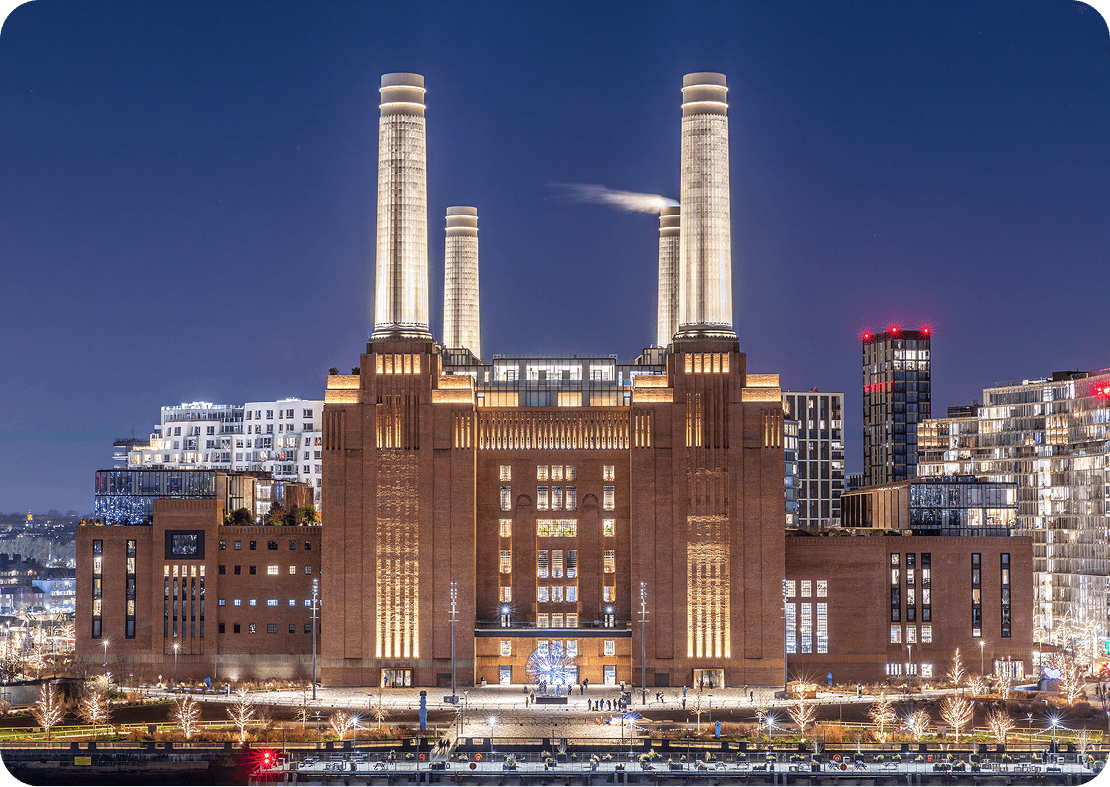
Battersea Power Station

We delivered the secure CNS and Wi-Fi services for Battersea Power Station – the largest brick building in Europe, spanning over 42 acres. Ideal also provides Smart Managed Services to support thousands of residential and commercial users.


Exterior of Co-op Live in Manchester. An Ideal client.

Co-op Live

We created a 5000-port CNS, integrating 40 different building systems at Co-op Live in Manchester, the most sophisticated music arena in Europe, with secure Wi-Fi supporting 23,500 concurrent users. Our network also supports ticketing, access control and a secure paperless user-experience across 40+ concessions.

External shot of 150 Holborn, one of the smartest buildings in Europe. An Ideal client.

150 Holborn

We designed implemented and support the secure CNS and Wi-Fi for 150 Holborn, the most advanced Smart Building in Europe. At 150, a dedicated single data layer enables real-time informed decision-making about working efficiencies, energy usage, sustainability and security, as well as monitoring all the building services.

Much more to come

Founder and Chief Executive, Moto Shakoori, says that Ideal has numerous projects in the pipeline and they are becoming more and more sophisticated.

“We are currently working on multi-million-pound development of the new headquarters for a globally recognised brand that takes ‘Smart’ to a new level.

“With Cisco’s technological innovation and our commitment to pushing what’s possible, the buildings we work on will continue to deliver better user environments, improved operational costs and sustainability benefits for years to come.”